Unlimited Advantages to 3D Printing
When you 3D print a model or prototype, you start to notice things you can’t on a computer screen. Structured 3D uses the latest technology to help bring your business or project to the next stage. Our state-of-the-art 3D printers produce astonishingly smooth and detailed models of anything, from buildings to dental crowns and durable models. The possibilities are endless.
Additive Manufacturing (AM) is a term to describe set of technologies that create 3D objects by adding layer-upon-layer of material. Materials can vary from technology to technology. But there are some common features for all Addictive Manufacturing, such as usage of computer together with special 3D modeling software. First thing to start this process is to create CAD sketch. Then AM device reads data from CAD file and builds a structure layer by layer from printing material, which can be plastic, liquid, powder filaments or even sheet of paper.
The term Additive Manufacturing holds within such technologies like Rapid Prototyping (RP), Direct Digital Manufacturing (DDM), Layered Manufacturing and 3D Printing. Structured 3D uses all four different 3d printing methods that were developed to build 3D structures and objects.
Stereolithography (SLA)
Stereolithography is a 3d printing method that can be used to implement your projects that involve 3D printing of objects. Although this method is the oldest one in history of 3D printing it’s still being used nowadays. The idea and application of this method are amazing. Whether you are a mechanical engineer, who needs to verify if the part can fit to your design, or creative person who wants to make a plastic prototype of new coming project, Structured 3D’s staff can help you to turn your models into a real 3D printed object.
Digital Light Processing(DLP)
Digital Light Processing is another 3D Printing process very similar to stereolithography. It uses digital micro mirrors laid out on a semiconductor chip. For 3D printing DLP as well as SLA works with photopolymers. But what makes SLA and DLP processes unalike is a different source of light. The important piece of the process is a liquid crystal display panel, that is being applied to the whole surface of building material during a single run of the DLP process. The material to be used for printing is liquid plastic resin that is placed in the transparent resin container. The resin hardens quickly when affected by a large amount of light. The layer of hardened material can be created in just a few seconds.
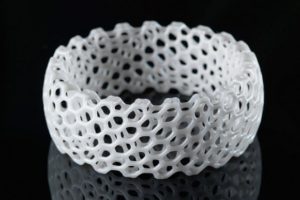
Fused deposition modeling (FDM)
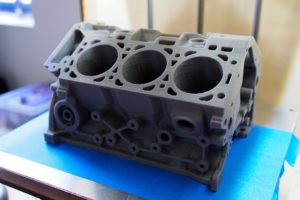
FDM can print not only functional prototypes, but also concept models and final end-use products. What is good about this technology is that all parts printed with FDM can go in high-performance and engineering-grade thermoplastic, which is very beneficial for mechanic engineers and manufactures. FDM is the only 3D printing technology that builds parts with production-grade thermoplastics, so things printed are of excellent mechanical, thermal and chemical qualities.
Ready for Dental and Medical Fabrications
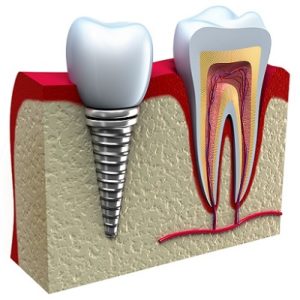
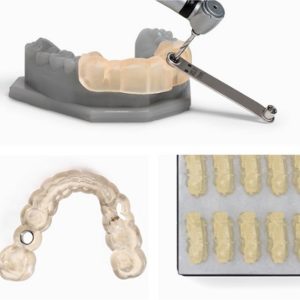
One of the most exciting aspects of 3D printer service is the ability to model prosthetics quickly and at affordable rates. We create perfect-fitting dental crowns, bridges and surgical guides. You only have to send us an intra-oral scan of the patient’s mouth, and we do the rest. Our engineers always create precise and polished models. Best of all, your patients no longer have to endure uncomfortable, foul-tasting, and inaccurate oral impressions.
Versatile Plastics to Fit Your Needs
We employ a variety of plastics during our printing to create the exact product you want, including ABS-grade projects. They range from transparent to opaque and from rubber-like to rigid. Our engineers are ready to answer any questions you may have about our process.
Solutions for Any Industry
From our studio in Long Island, New York, we assist a variety of companies in all types of sectors, including private consumers and students. Our engineers create complex and durable models in-house, directly from CAD data. With 3D printer service, you can visualize design and see the detail and scale of different aspects.